Launches
ON RECORD23MISSIONS
22 of them succeeded. The earliest was in 1964 and the latest in 2026.
MARKED ON THIS DATE
1977 · 49 years ago today
Voyager 1 launches
Voyager 1 left Earth carrying a gold record. It's now the most distant human-made object.
read moreARCHIVE // DAY OF YEAR
23 launches flew on September 5, the earliest of them in 1964, and 22 of them succeeded. Wikipedia lists 3 spaceflight and astronomy events on September 5. Below are NASA's Astronomy Pictures of the Day for September 5, from 1 different years.
23MISSIONS
22 of them succeeded. The earliest was in 1964 and the latest in 2026.
3ENTRIES
Spaceflight and astronomy entries from Wikipedia for this date, oldest first, starting in 1977.
1IMAGE
NASA's Astronomy Picture of the Day for September 5, in the years it credits only NASA. We don't show pictures that belong to a photographer or a partner agency.
NASA’s Astronomy Picture of the Day for this date, in the years it credits only NASA.
2026
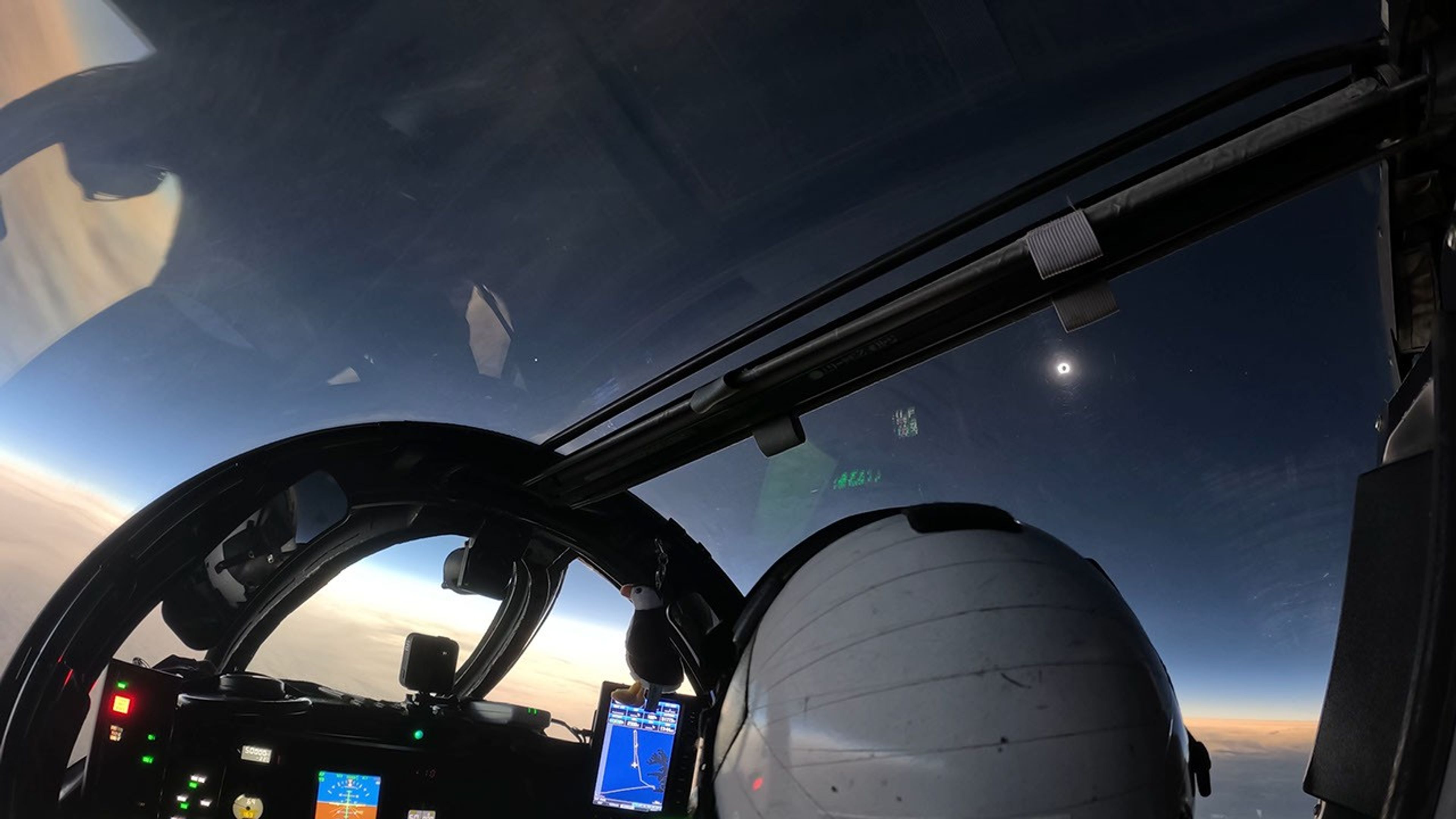
Chasing the shadow of a New Moon, NASA’s WB-57F high altitude research aircraft took to the skies off the coast of Iceland on August 12 to observe a total solar eclipse. At 50,000 feet the aircraft was piloted along the precisely determined path of totality to maximize its time in the Moon’s shadow. A suite of high-resolution cameras on board was able to record eclipse data from above the clouds, dust, and atmospheric water vapor that interfere with observations made closer to the ground. This view from the cockpit, taken from an inflight video, captures the solar corona emerging at the beginning of totality. The sky appears dark in the shadow of the Moon. Venus is shining left of center in the video frame, while Jupiter and Mercury are just visible to the right of the eclipsed Sun. But the sky is bright along the distant horizon below, beyond the reach of the Moon's shadow. APOD's main NASA site is moving: From apod.nasa.gov to science.nasa.gov/apod Tomorrow's picture: enhancing Pluto
NASA · public domain
1977
NASA launched the space probe Voyager 1, currently the farthest spacecraft from Earth, from Launch Complex 41 at Cape Canaveral Air Force Station.
NASA ↗Astronomy and spaceflight books for a general reader. No textbooks.
As an Amazon Associate I earn from qualifying purchases. Buying through these links doesn't cost you anything extra.
LISTING
Sagan's tour of the universe and how we came to understand it. It keeps the science in.
LISTING
Sagan's case for people leaving Earth one day, and an honest look at how hard that would be.
LISTING
A science-fiction novel from the author of The Martian, built around solving one engineering problem after another.
BROWSE opens an Amazon search. It isn't a pick of one product.
LINKS AMAZON.COM
Event text and thumbnails come from Wikipedia and are used under CC BY-SA 4.0. Images come only from Wikimedia Commons, which doesn't accept non-free content. Each thumbnail links to its file page, which lists its licence and author.
Launch records are from The Space Devs’ Launch Library 2. Pictures are NASA’s Astronomy Picture of the Day. Many of them belong to the photographer or a partner agency, so we only show the ones credited to NASA alone.